

- This event has passed.
CEFISES Seminar: Florian van der Zee, “How do we know it’s good to gift? Bodily donations and some directions for the H&P of moral knowledge”
Livestream  https://www.youtube.com/@CEFISES
Series: HPS
Speaker: Florian van der Zee (Erasmus University Rotterdam)
Title: “How do we know it’s good to gift? Bodily donations and some directions for the H&P of moral knowledge”
Abstract
By attending to science “not as a vacuous generality but in its specific, local formation”, as Peter Galison put it in 2008,[1] work in the field of HPS has fruitfully multiplied, shifted, and elucidated questions of what it means to make scientific knowledge. A similar attention to the formation of morality can open up fruitful avenues for the H&P of moral knowledge. In this presentation, I will distil some such avenues by reflecting on various collaborative inquiries into the formation of the “gift paradigm” of bodily material donation.
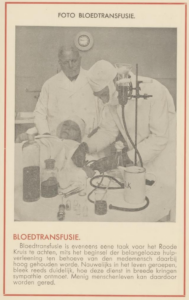
Nowadays, the gift paradigm—the moral requirement that human bodily materials are donated voluntarily and without remuneration, not sold—is widely established internationally.[2] But this was not always so. The moral position that it’s good to gift had to be formed over time. We have inquired how during the 20th century the gift paradigm emerged and developed in the Netherlands, one of the early countries in which it became dominant, as numerous bodily materials became donatable medical goods. I will present some key findings from these inquiries that shed light on the multiple and interacting ways in which the knowledge that it’s good to gift has been established. These include not only shifting justificatory logics, but also shifting conceptual and environmental circumstances that impact their salience and validity. Taken together, the findings discussed provide a historically dynamic view of the moral situation that offers fertile directions for the H&P of moral knowledge.
[1] Galison, Peter, “Ten Problems in History and Philosophy of Science,” Isis 99, no. 1 (2008): 111.
[2] For example, it is made into law in countries like Belgium and the Netherlands, and required by EU Regulation 2024/1938 on standards of quality and safety for substances of human origin.